Thirteen engines
Thirteen engines are defined, including Postgres, MySQL, MariaDB, Redis and MongoDB. You create them like any other resource and attach them to apps such as Next.js and Node services.
Use case: Verified backups
Levelrail creates Postgres, Redis, MySQL and other databases from the dashboard, CLI or API, links them to your apps and backs them up on a schedule to storage you own. A backup file is not a backup until a restore of it has worked, so restore drills are built in.
curl -fsSL https://levelrail.com/install.sh | sudo sh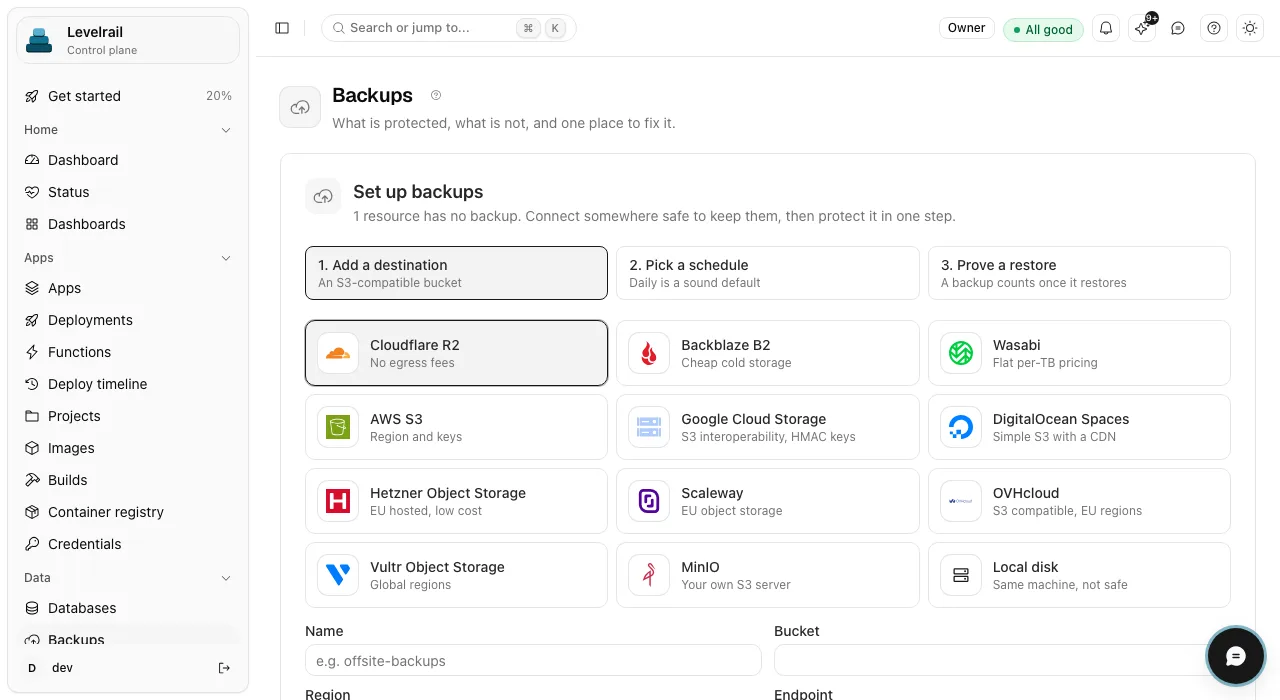
How it works
What you get
Thirteen engines are defined, including Postgres, MySQL, MariaDB, Redis and MongoDB. You create them like any other resource and attach them to apps such as Next.js and Node services.
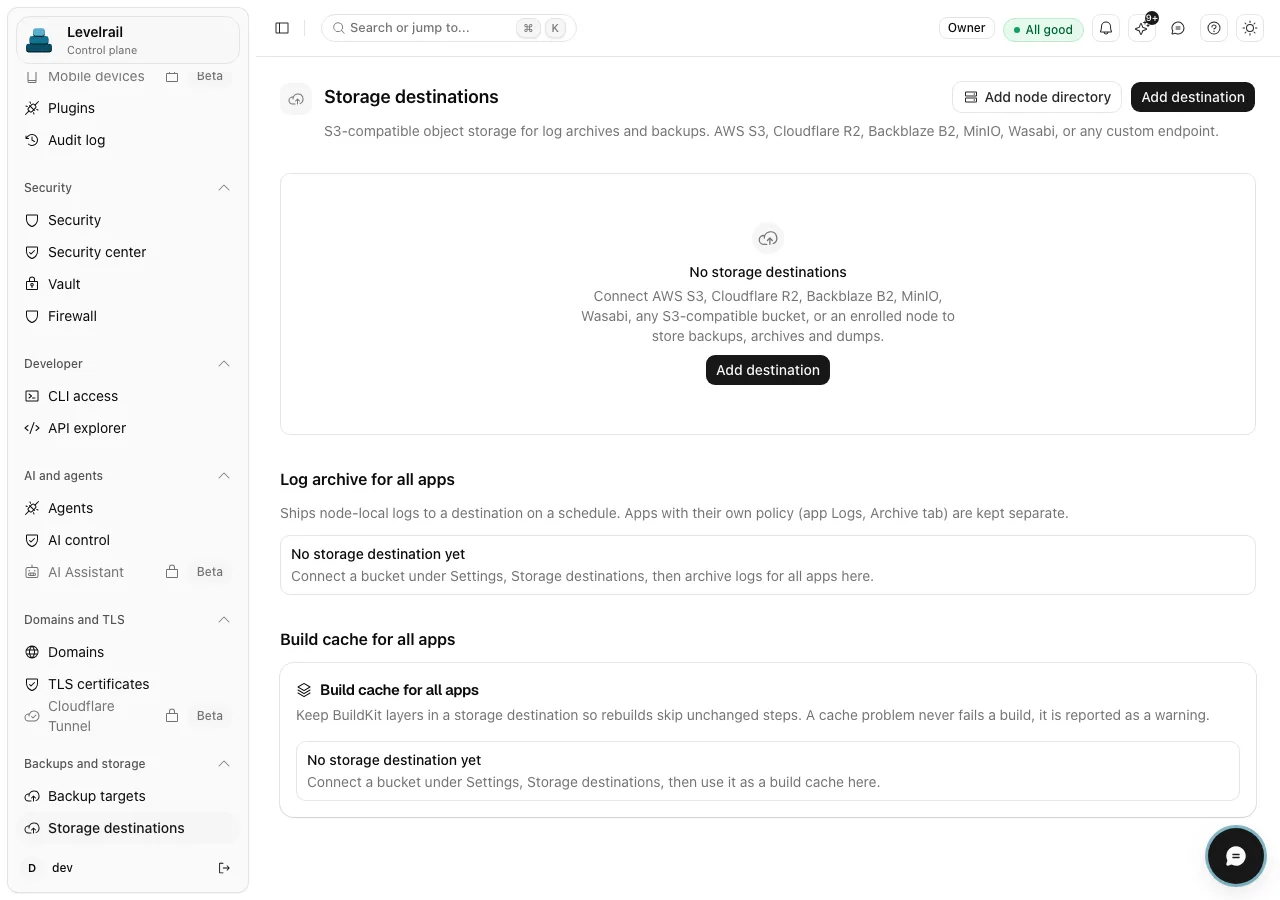
Backups run on a schedule with retention, to any S3-compatible bucket. Storage credentials are write-only once saved.
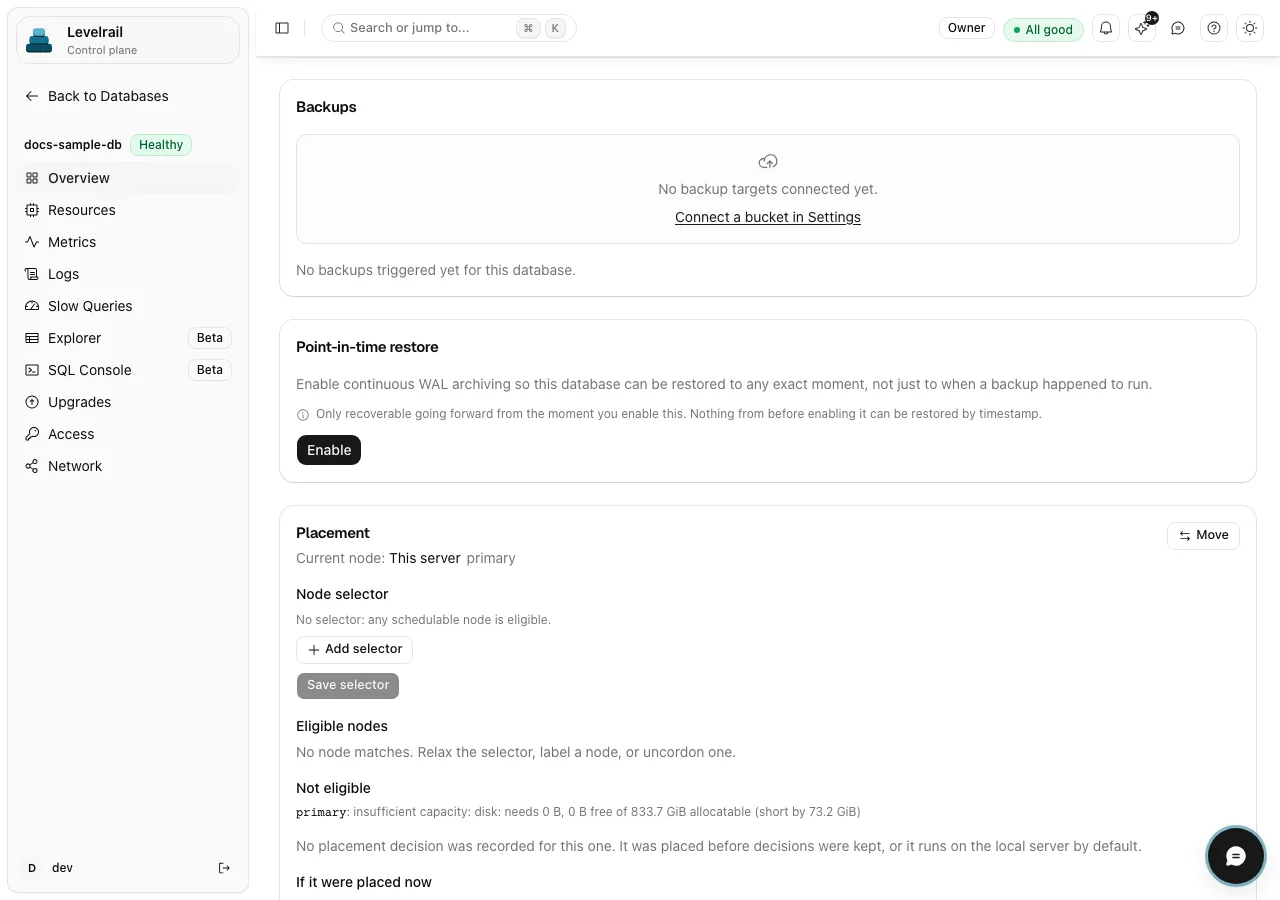
Point-in-time restore for Postgres, covered by a live end-to-end test against object storage that recovers data after both the data volume and the WAL archive volume are deleted.
A drill restores a backup into a scratch resource, validates it and destroys it. It runs weekly by default.
Snapshots of the control plane itself, with the master key kept out of the snapshot. The architecture page shows what the control plane holds.
In the product
Get started
Create the database from the dashboard, CLI or API and note the connection details Levelrail generates.
Attach it to an app, then add a backup schedule and an S3-compatible storage target.
Run a restore drill from the Backups page and read the result before you rely on the backup.
Go deeper
Scope and maturity, stated plainly so you can plan around them.
Maturity differs by feature. Feature status lists what is stable, beta or behind a flag, with the evidence for each.
FAQ
Run a restore drill from the Backups page. It checks the object, compares its checksum, restores it into a throwaway resource, validates the result and removes the scratch copy. Drills also run automatically once a week by default.
Yes, for Postgres. You turn it on per database, and you can recover only from the moment it was enabled. Other engines get scheduled dumps or snapshots and are labeled beta.
In an S3-compatible bucket that you own, such as AWS S3, Cloudflare R2, Backblaze B2, MinIO or Wasabi. Credentials are write-only once saved.
One command installs the control plane. Apache 2.0, no license key and no paid tier.
curl -fsSL https://levelrail.com/install.sh | sudo sh